
The motorsports world is once again turning its attention toward one of the most recognizable last names in American racing. Brexton Busch, the 10-year-old son of NASCAR star Kyle Busch, is set to race at Madera Speedway, and what might normally be viewed as another step in a young driver’s development has quickly become the center of a much larger debate.
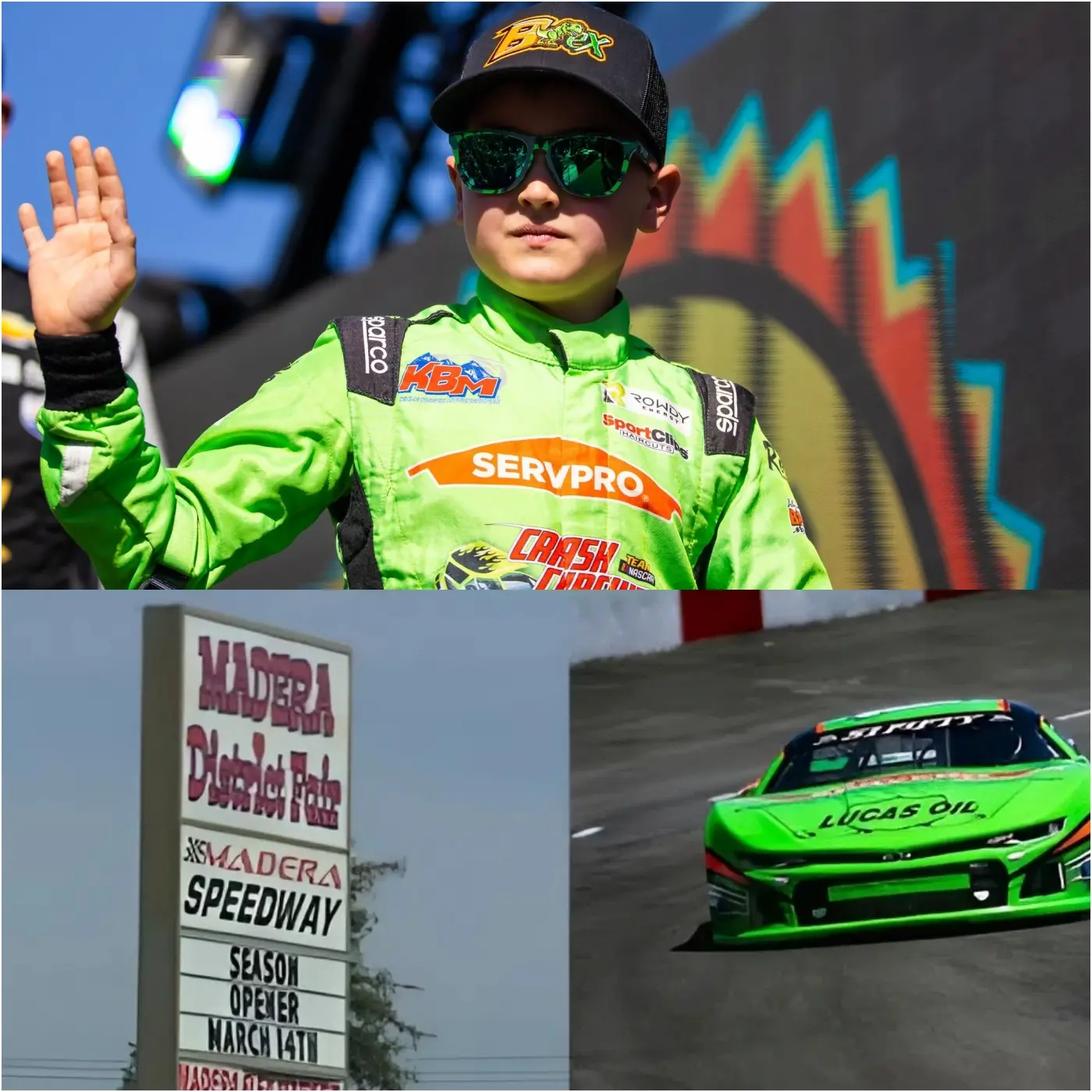
For supporters, Brexton’s appearance at Madera represents the natural progression of a talented young racer who has already spent years building his skills behind the wheel. They see a child who loves racing, understands competition, and is proudly continuing a family tradition that has shaped modern NASCAR. To them, this is not pressure; it is passion being given room to grow.
But critics are asking a harder question. Is 10 years old too young to carry the weight of cameras, expectations, social media attention, and one of the most famous names in stock car racing? In their view, Brexton is not simply entering a race. He is entering a public conversation about legacy, childhood, ambition, and the dangers of pushing young athletes too quickly into the spotlight.
The debate has grown louder because Brexton is not an ordinary young driver. He is the son of Kyle Busch, a two-time NASCAR Cup Series champion and one of the most intense competitors the sport has ever produced. The Busch name carries history, emotion, success, controversy, and enormous expectation. That legacy follows Brexton before he even climbs into the car.
Madera Speedway has become the stage for this conversation because its Jr. Late Model program is known as a serious development platform for young racers. The division is designed for drivers between 10 and 16 years old, which means Brexton is not breaking the rules by competing. Still, legality and emotional readiness are not always the same thing, and that is where the argument begins.
Supporters argue that youth racing has always been part of motorsports culture. Many professional drivers started young, learning race craft, discipline, mechanical awareness, and competitive instincts long before they were old enough to hold a regular driver’s license. In that sense, Brexton’s move into Jr. Late Models is not shocking. It is part of a long tradition in a sport where development often begins early.
They also point to Brexton’s résumé. He has already won across multiple racing disciplines and has shown unusual comfort in competitive environments for someone his age. His success in Bandoleros, Legends, and Micro racing has made him a young name to watch. For many fans, his Madera appearance is not about hype, but about watching a skilled young racer take the next logical step.
Still, the other side of the debate cannot be dismissed. Talent does not erase childhood. A young driver may be capable, prepared, and enthusiastic, but the pressure surrounding a famous racing family can become overwhelming in ways that are difficult to measure. Every result can be magnified. Every mistake can be replayed. Every moment can become content for people who forget they are watching a child.
That is what makes Brexton’s situation so delicate. If he wins, some will immediately call him the future of NASCAR. If he struggles, others may question whether he belongs at that level. Either way, the reaction may become larger than the race itself. For most 10-year-olds, a difficult weekend can be forgotten by Monday. For Brexton, it may become a headline.
Kyle Busch’s shadow is impossible to ignore. Known as “Rowdy,” Kyle built a career on aggression, confidence, speed, and a fierce refusal to back down. He became one of NASCAR’s defining personalities, admired by many, criticized by others, but never ignored. To be his son in racing means growing up with a comparison that few young athletes could fully understand.
The central question is whether Brexton is chasing his own dream or being pulled into a story that adults have already written for him. That question may not have a simple answer. Children can genuinely love the same sport as their parents. They can also feel the invisible pressure to continue what their family is known for. Often, both things can be true at the same time.
This is why the conversation around Brexton has become about more than one race at Madera Speedway. It reflects a wider concern in youth sports, where young talents are increasingly filmed, branded, promoted, and judged before they are emotionally mature enough to understand the full consequences of public attention. Motorsports may be unique in danger and cost, but the pressure problem exists everywhere.
In racing, that pressure can feel even sharper because the sport is expensive, technical, and deeply tied to sponsorship. A young driver with a famous name can attract attention quickly, and attention can become opportunity. But opportunity can also become obligation if the adults around the child begin to treat the future as a business plan rather than a personal journey.
To be fair, there is no evidence that Brexton lacks support or that he is being forced into the car against his will. By many public accounts, he appears passionate, focused, and excited to compete. The concern is not necessarily about one family’s decision. It is about the environment around him, where fans, media, and industry voices may place adult-sized meaning on a child’s every lap.
That environment will be especially intense this weekend. Cameras will follow him. Fans will compare him. Social media will react in real time. Some people will see courage and promise. Others will see a child being asked to carry too much. The race itself may last only a short time, but the conversation around it will likely continue long after the checkered flag.
Madera Speedway’s Jr. Late Model division exists precisely because young drivers need structured places to learn. In that sense, the program can be viewed as a controlled environment rather than a reckless leap. The cars are adapted for junior competition, the field is age-limited, and the purpose is development. But even a well-designed development path cannot fully control the emotional weight of fame.
For Brexton, the healthiest outcome may not be measured only by finishing position. It may be measured by whether he learns, enjoys the process, and leaves the weekend wanting to continue for the right reasons. At 10 years old, growth matters more than headlines. Confidence matters more than public approval. Joy matters more than becoming the next version of someone else.
The NASCAR community also has a responsibility in how it talks about him. Fans can support Brexton without turning him into a symbol. Media can cover his development without treating him like a finished product. Sponsors can help create opportunity without demanding identity. Veterans can offer guidance without framing his childhood as a test of whether he can live up to the Busch name.
The most powerful racing legacies are not built by imitation. They are built when the next generation takes what came before and turns it into something personal. If Brexton continues in the sport, he will not need to become Kyle Busch to honor his father. He will need to become himself, with his own style, his own lessons, his own victories, and his own failures.
That may be the point many supporters are trying to make. Brexton is not being handed a NASCAR Cup ride. He is racing in a youth development series, learning a new form of stock car competition and testing himself against other young drivers. The spotlight may be enormous, but the step itself is part of a recognized ladder. The challenge is making sure the spotlight does not become bigger than the child.
Critics, however, will continue to ask whether any 10-year-old should be placed in such a visible position. Their concern is not necessarily about Brexton’s ability, but about the culture around young athletes. When adults become too eager to identify the next superstar, they can unintentionally turn childhood into preparation for public consumption. That is the danger many people are warning about.
As race day approaches, one thing is certain: all eyes will be on Brexton Busch. Some will watch because they believe they are seeing the early steps of a future NASCAR star. Others will watch with concern, wondering whether the pressure is already too much. Between those two views lies the truth that matters most: Brexton is still a child, even if his last name belongs to racing history.
Whether this weekend becomes a breakthrough, a learning experience, or simply another race in a long development journey, it should not be allowed to define him completely. Brexton Busch deserves room to grow beyond comparison, beyond hype, and beyond the expectations attached to his family name. If racing is truly his dream, then the sport’s job is not to rush him into the spotlight, but to help him grow strong enough to choose his own path.